
The important question is not only "is it mold?" It is whether moisture is active, whether the wood is still sound, and what has to change so the condition does not return.
Crawl spaces in the Raleigh area are naturally prone to moisture. Humid summers, clay soils, shaded foundations, plumbing leaks, poor drainage, and exposed dirt floors can all create damp conditions under a home.
When moisture stays high, homeowners may notice white, black, green, brown, or fuzzy-looking material on framing, masonry, insulation, or stored items. It is common for any visible growth to be called mold. In reality, crawl spaces can contain several different conditions that look similar but mean different things.
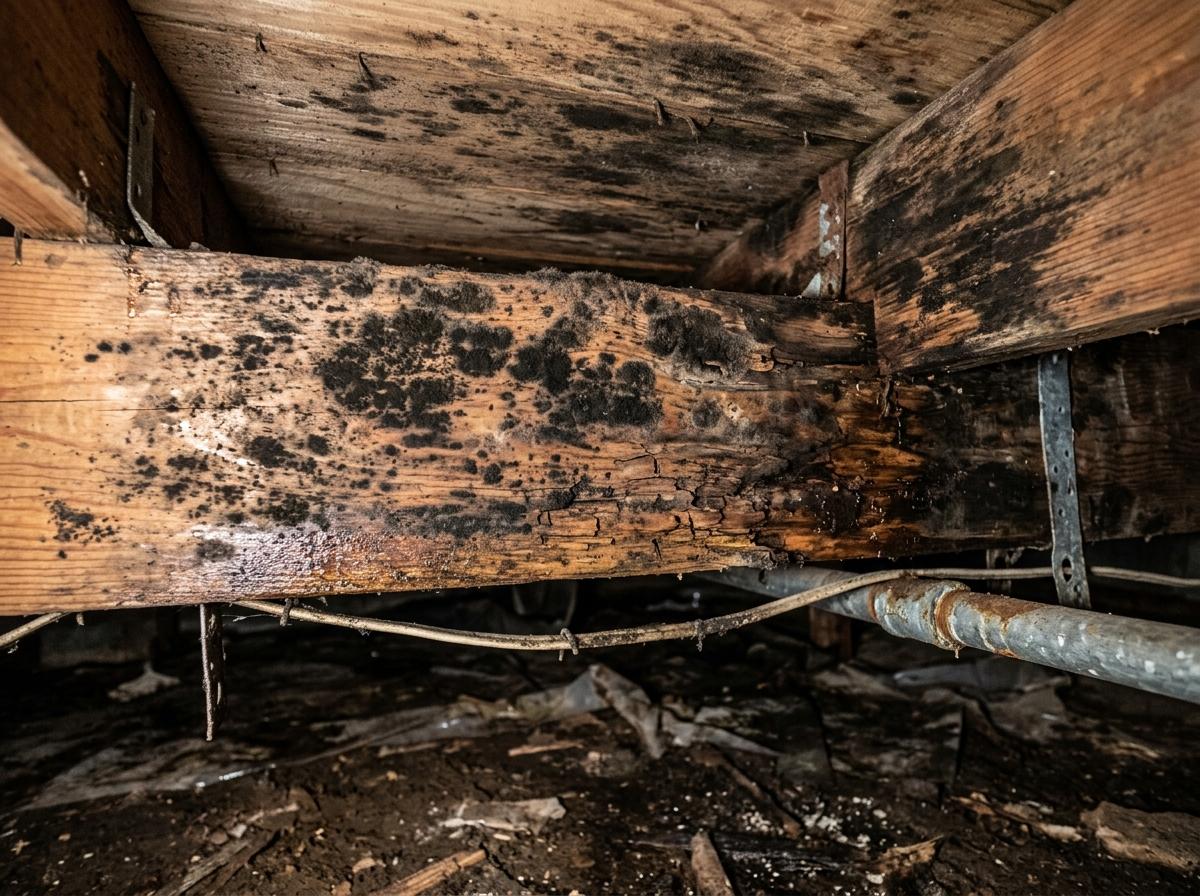
Surface mold
Surface mold is common when wood, insulation, paper, or stored materials stay damp long enough for growth to establish. The EPA explains that mold needs moisture and an organic food source, both of which can be present in a crawl space.
Surface mold may appear fuzzy, powdery, spotted, or smeared. It can be black, gray, green, white, or brown. It often indicates elevated humidity, condensation, leaks, or poor ground-moisture control.
For homeowners, the key point is that cleaning visible mold without correcting the moisture source is usually temporary. The dampness that allowed the growth needs to be found and controlled.
Sapstain and staining fungi
Some dark discoloration in wood is staining, not active surface mold. Sapstain fungi can discolor lumber before or after construction, especially when wood was exposed to moisture. The wood may look blue, gray, black, or streaked.
Staining fungi are important to identify because they can look alarming but do not always mean the wood has lost structural strength. The assessment still needs to confirm current moisture levels and whether decay is present.
Brown rot and white rot
Wood-decaying fungi are more serious because they can weaken framing. Brown rot can leave wood cracked, dry, cubed, brittle, or shrunken. White rot may leave wood fibrous, stringy, lighter in color, or soft.
In Raleigh crawl spaces, decay risk rises when wood stays wet from drainage problems, plumbing leaks, condensation, failed vapor barriers, or high humidity. A good assessment checks whether the issue is only surface discoloration or whether joists, girders, sill plates, band joists, or subflooring are losing strength.
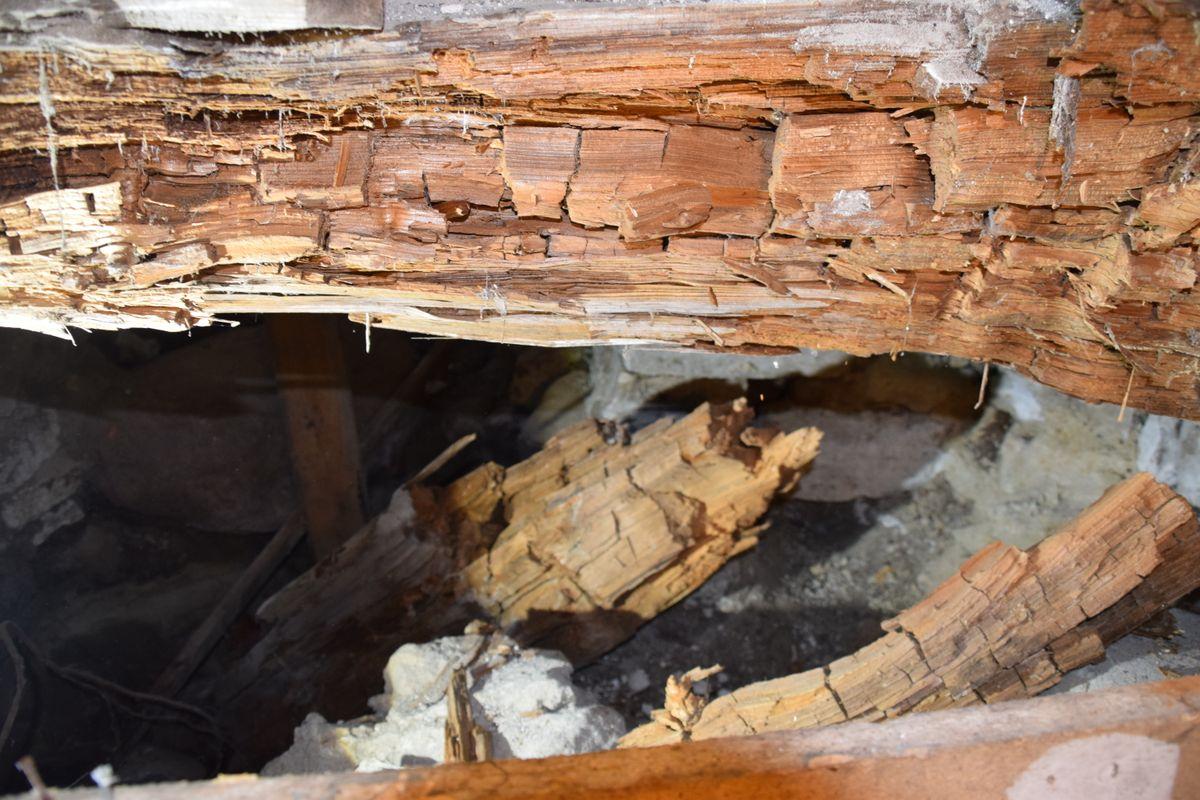
Water-conducting fungus
Water-conducting fungus is less common, but it deserves attention because it can move moisture across surfaces and support decay. One example discussed in building-science and pest-control literature is Meruliporia incrassata, sometimes called a water-conducting or dry-rot fungus.
This type of condition may appear as mats, strands, fans, or spreading growth near damp wood and masonry. If suspected, the response should be careful: verify active moisture, inspect affected wood, and determine whether a pest, fungal, or structural specialist should be involved.
Efflorescence and mineral deposits
White powder on masonry is often not mold at all. Efflorescence happens when moisture moves through block, brick, concrete, or mortar and leaves salts behind as it evaporates.
Efflorescence matters because it points to a moisture path through masonry. It does not grow like mold, but it can be confused with mold when it appears on crawl-space walls, piers, or foundation surfaces.
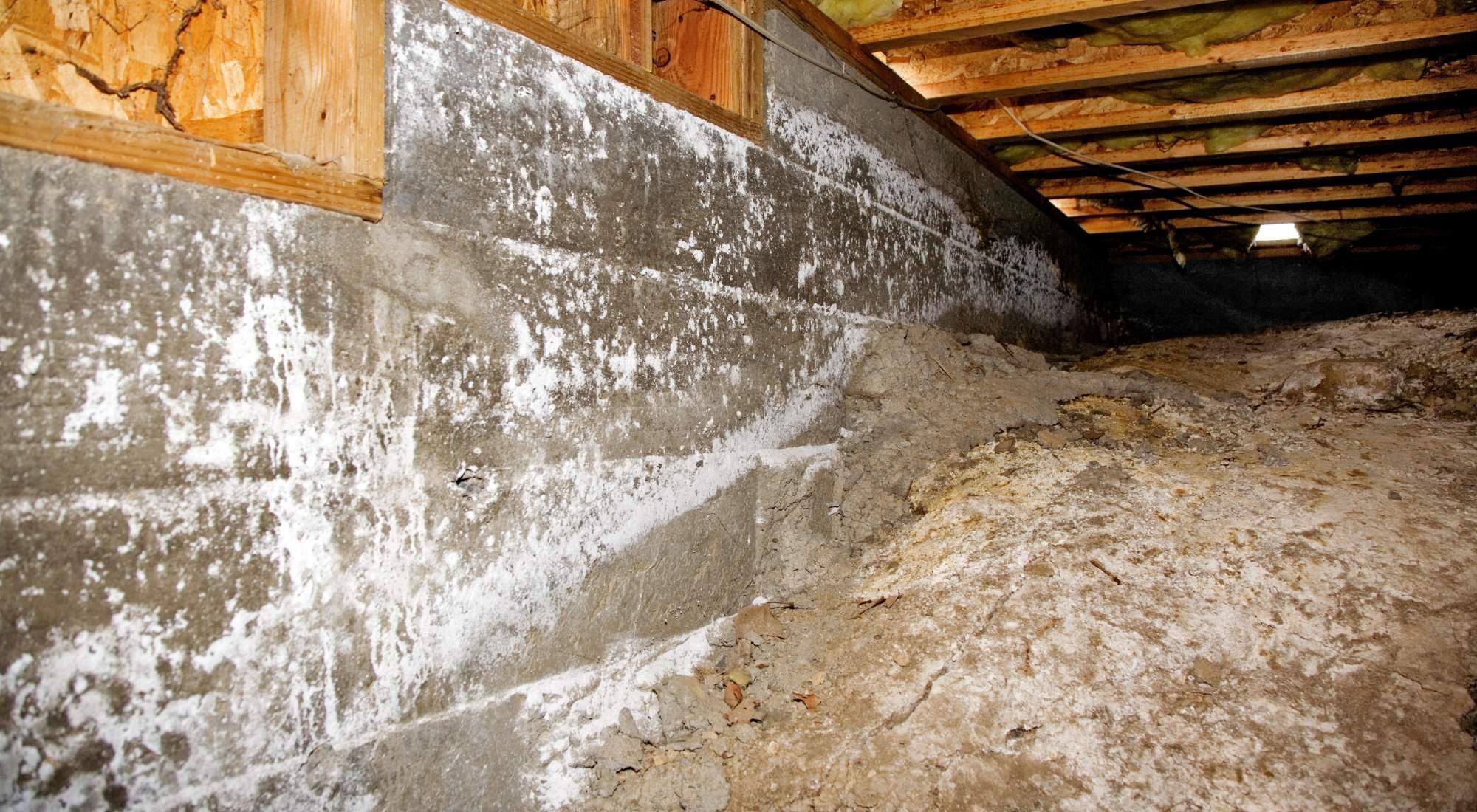
Why crawl-space conditions get misidentified
Crawl spaces are dark, humid, and visually messy. Many substances overlap in color and texture. A quick look from the access door may not be enough to separate mold, staining fungi, wood decay, insect-related damage, or mineral deposits.
Home inspection standards also matter. North Carolina home inspectors perform a visual, noninvasive inspection under defined standards of practice. That kind of inspection can identify visible defects and conducive conditions, but it is not the same as laboratory mold testing, pest treatment, or invasive structural evaluation.
That is why homeowners should be cautious about any fast diagnosis that jumps straight from "growth" to an expensive repair package without documenting moisture source, wood condition, and the reason that specific scope is needed.
What a Raleigh-area homeowner should ask
- Where is the moisture coming from?
- Are the wood moisture readings elevated now?
- Is the visible material on wood, masonry, insulation, or stored items?
- Is the wood stained, actively decaying, or structurally compromised?
- Are there signs of termites, beetles, or other wood-damaging organisms?
- Would cleaning alone solve the problem, or will the condition return?
- Which repairs are urgent, and which can be phased?
Bottom line
Common crawl-space growth in Raleigh homes can include surface mold, staining fungi, wood-decay fungi, water-conducting fungus, and mineral deposits such as efflorescence. The right next step depends on what is present and why it appeared.
JAGS Consultants helps homeowners slow the decision down with an independent crawl-space assessment, photos, plain-English findings, and questions they can take to contractors before approving a repair scope.
Common questions about crawl-space growth
Is every white substance in a crawl space mold?
No. White material on masonry may be efflorescence, which is mineral salt left behind by moisture movement. White or fuzzy material on wood or stored items may be biological growth. The surface, moisture path, and wood condition need to be checked before naming the problem.
Can staining fungi weaken crawl-space framing?
Staining fungi can discolor lumber without always reducing structural strength, but the finding still deserves moisture readings and a wood-condition check. The concern is whether current dampness has also allowed decay fungi or insect damage to develop.
When is crawl-space growth a structural concern?
Growth becomes a structural concern when wood is soft, brittle, cubed, stringy, shrunken, or otherwise deteriorated. In that case the issue is not just cleaning; the assessment needs to identify the moisture source and whether framing repair is needed.
Should crawl-space growth be cleaned before fixing moisture?
Cleaning visible growth before correcting moisture is usually temporary. The better sequence is to find the water source, reduce wood moisture, correct drainage or vapor-barrier problems, then clean or repair affected materials as appropriate.
Does a JAGS assessment replace mold testing or pest treatment?
No. JAGS provides an independent crawl-space assessment and homeowner guidance. If laboratory mold testing, pest treatment, or structural engineering is needed, the assessment helps identify why that specialist may be appropriate.
Sources
- EPA mold course, Chapter 2
- NC State Extension mold and moisture checklist
- EPA: Why is mold growing in my home?
- NC State Extension moisture guidance
- NC State Extension: powderpost beetles and wood-inhabiting fungi
- EPA mold image library archive
- NC Home Inspector Licensure Board statutes and rules
- NC home inspector standards of practice
- NCDA structural pest control consumer information