
Our main focus is your crawl space — the foundation of a healthy, functional home and the area most likely to hide moisture, framing, and support problems. We look at what's been compromised by age and wear, then sit down with you to explain your options.
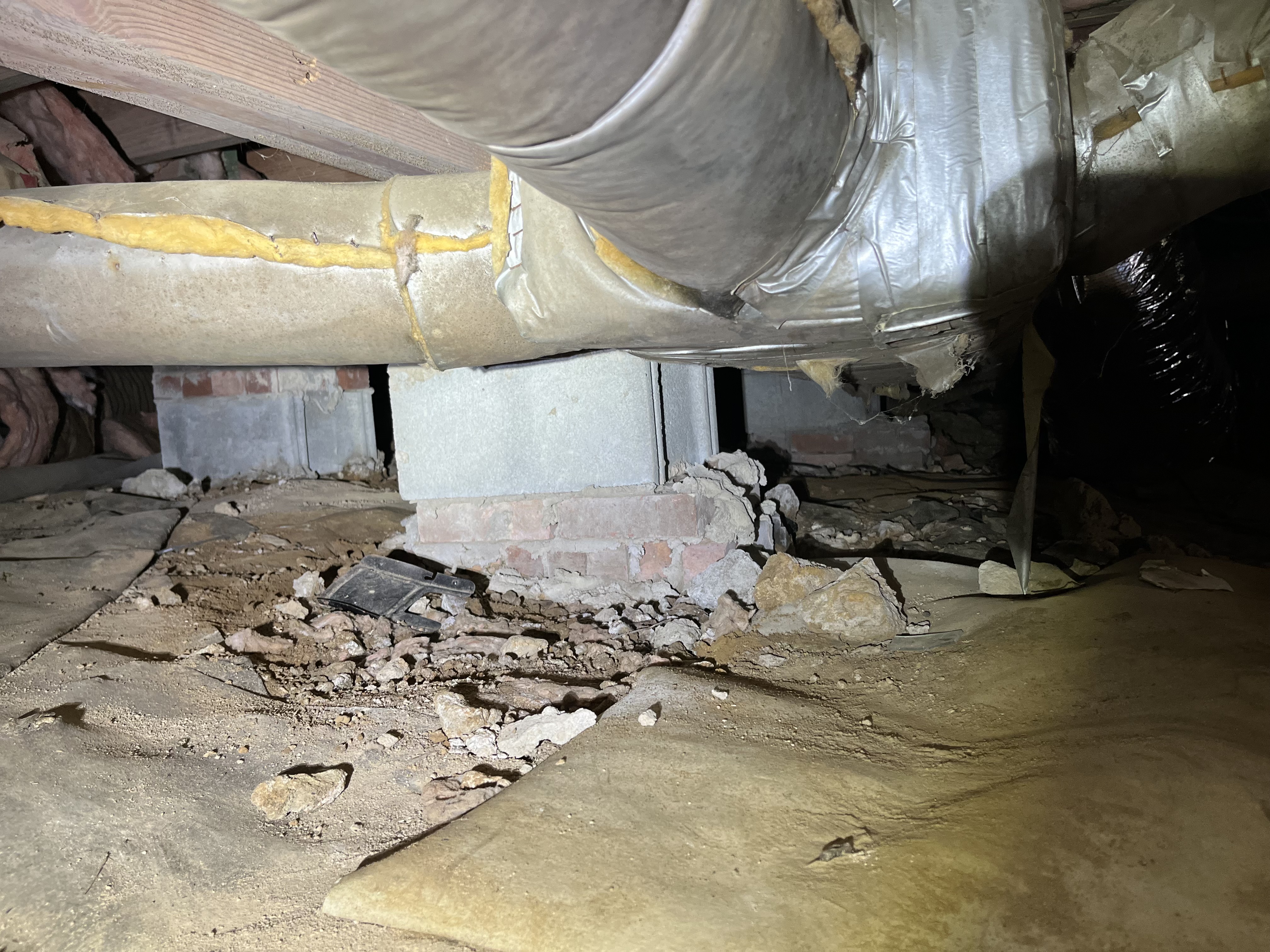
Moisture, framing, supports, vapor barrier, and the early signs of trouble underneath.
How water moves around and under the home before it turns into expensive damage.
Where the home is losing efficiency and comfort through the crawl space and attics.
How conditions below affect the air your family actually breathes.
Ventilation and air movement through the crawl space and home.
Condition of interior and exterior ductwork that runs below the home.
Signs around piers, block, settling, and support points that deserve a closer look.
What needs attention now, what can wait, and what may be unnecessary — explained in homeowner-friendly terms before anyone sells you a fix.
Exterior factors most crews ignore — grading, downspouts, gutters, and drainage around the home that can cause crawl-space problems.
Understanding your options
After the assessment, we go in-depth on the real choices in front of you — the benefits of different materials, the mechanical equipment a company might propose, and whether a professional fix is needed or it's something you can handle yourself.
We also explain the value of sequencing — which projects are worth doing first, and when doing everything at once is overkill — plus which types of companies are the right fit for each job. You'll know the pros and cons of every corrective fix, whether it's material, mechanical, or a full system installation.
Beyond the basics
Over the years I've seen how much gets missed when companies "inspect" a crawl space. The biggest misses are the exterior factors. A crew spots standing water and immediately quotes an expensive French drain and sump pump — without checking what's actually causing it: poor grading around the foundation, downspouts pointed the wrong way, or clogged, overflowing gutters. Plenty of those problems can be corrected without the expensive system.
They'll note the moisture but rarely ask whether poor airflow is the cause — sometimes just trimming back the hedges makes a real difference. They'll tell you "up to 60% of the air you breathe comes from your crawl space," yet never look inside the ductwork to see whether it's already been affected. These are the things most companies don't want you to know, because many of them you can fix yourself.
As part of every assessment, I look at all of these factors and more — so you have every option in front of you before you make the "what's next" decision.
The same field checklist Aaron built over 16+ years — every area scored no issues / some issues / major issues, with notes and suggestions for each.
Foundation cracks · landscaping · drainage along the foundation · downspout positioning · gutter condition & overflow · fascia boards · foundation vents · siding & decking · walkways · property pitch · exterior venting covers · rodent access.
Vapor barrier · insulation & type · foundation walls · insect, rodent & termite activity and access points · crawl-space door · structural concerns · standing or penetrating water · wood-moisture readings by location.
Exterior condition · drooping or sagging · kinks & restrictions · condensation · distribution boxes · disconnections · signs of growth · leaks · interior of the ductwork · flooded ducts.
Attic access · loose, leaky, or torn ducts · roof line & venting · insulation type & R-value · roof-deck temperature · approximate direct-sun exposure.
What you walk away with
You'll leave armed with a full picture of what your home's issues actually look like, what suggestions to expect when a service company shows up — and, just as importantly, what not to fall for.