
A crawl space is a foundational buffer between the ground and your living space — and in Raleigh's humid climate, excess moisture there is the single biggest threat to the wood, metal, and masonry holding your home up.
Crawl spaces are an essential but often overlooked part of many Raleigh, North Carolina homes. This hidden area beneath the house supports structural components critical to your home's stability and longevity. But Raleigh's humid subtropical climate can drive excess moisture into the crawl-space air and soil. Homeowners who understand the structural elements down there — and the risks moisture poses — are far better equipped to protect their homes from costly damage.
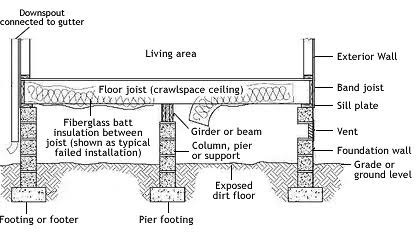
Key structural components found in crawl spaces
A crawl space sits between the ground and the main living area. Here are the primary structural elements you'll find in a typical one:
1. Foundation walls
Foundation walls carry the weight of the home and transfer it to the soil below. In crawl spaces they're usually concrete or masonry, running from the ground up to the floor joists above.
2. Floor joists and support beams
Floor joists span the crawl space horizontally and support the floors above — typically pressure-treated wood or engineered lumber to resist decay. Support beams (girders), often running perpendicular to the joists, carry the load from the joists to the foundation walls or piers.
3. Piers and columns
Piers and columns are the vertical supports beneath the beams, spreading the weight evenly onto the soil. They keep floors level and prevent sagging.
4. Subflooring
The subfloor is the platform directly above the crawl space that supports your finished flooring — usually plywood or oriented strand board (OSB) fastened to the floor joists.
Why excess moisture is a problem in Raleigh crawl spaces
Raleigh's hot, humid summers and mild winters create conditions ripe for excess crawl-space moisture, which can come from soil evaporation, poor drainage, plumbing leaks, or inadequate ventilation. Here's how that moisture attacks each part of the structure.
Wood rot and decay
Prolonged moisture weakens wooden joists, beams, and subflooring through rot and fungal growth, compromising stability and leading to sagging or uneven floors.
Mold and mildew growth
Damp conditions foster mold and mildew on wood, insulation, and utilities. The spores reduce indoor air quality and can trigger allergies and respiratory problems.
Metal corrosion
Metal support columns and fasteners rust under persistent dampness. Corrosion weakens those supports and connections, putting the whole structure at risk.
Soil instability and foundation problems
Excess soil moisture makes the ground expand, contract, or erode, disturbing the crawl space's footings and piers. Over time that can cause foundation settlement or shifting.
Pest infestation
Humid, damp crawl spaces attract termites, carpenter ants, and rodents, which thrive in moist wood and cause further structural damage.
Signs of moisture-related structural issues
- Musty or moldy odors from crawl-space vents or inside the home.
- Visible mold or mildew on crawl-space wood or insulation.
- Sagging or uneven floors above the crawl space.
- Warped or discolored wood components.
- Rust stains or corrosion on metal supports.
- Increased pest activity near crawl-space access points.
- Water pooling on the crawl-space floor after rain.
How to address crawl-space moisture problems
- Improve drainage: proper grading and perimeter drains divert water away from the foundation; gutters and downspouts should carry rainwater well clear of the house.
- Install a vapor barrier: a heavy-duty plastic barrier over the soil blocks ground moisture from evaporating up — seal it at seams and walls for full effect.
- Enhance ventilation: good airflow lets humid air escape and drier air in; vent fans or improved vents help balance humidity through Raleigh summers.
- Add dehumidification: for very humid crawl spaces, a dedicated dehumidifier controls moisture year-round.
- Repair plumbing leaks: fix leaks and condensation promptly to prevent water accumulation.
- Use treated wood and corrosion-resistant materials: pressure-treated lumber and galvanized or stainless supports reduce future risk.
- Control pests: seal gaps and treat as needed to keep termites and rodents out of damp wood.
Why Raleigh homeowners should prioritize crawl-space moisture
Ignoring moisture down there leads to severe structural damage, health risks, and expensive repairs later. Addressing it proactively helps you preserve your home's structural integrity, improve indoor air quality, lower energy costs, prevent pests, and maintain or increase property value in the Raleigh market.
The bottom line
Crawl spaces are vital to Raleigh homes, housing key structural elements and utilities. Left unmanaged, moisture there causes wood rot, mold, foundation shifting, and pest problems that undermine the safety and comfort of your home. If you notice signs of excess moisture or suspect deterioration, get an honest look before deciding on repairs — it's the difference between a small fix now and a big one later.