
When fiberglass crawl-space insulation gets wet, it stops doing its job — it loses the trapped air that gives it its R-value, and it can start growing mold.
If you live in the Raleigh, NC area, keeping your crawl-space insulation in good shape matters for a comfortable, energy-efficient home. But moisture is a common problem down here, given the region's humid climate. When fiberglass insulation gets wet, its effectiveness drops sharply. Understanding the damage, recognizing the signs, and knowing how to fix it will help keep your home safe, efficient, and mold-free.
Why moisture in Raleigh-area crawl spaces is a concern
In the Raleigh area, crawl-space moisture can come from humidity, heavy rain, poor drainage, or plumbing leaks. Crawl spaces sit close to the ground and easily trap moisture, creating a damp environment that harms insulation. Fiberglass — the most common crawl-space insulation — is especially vulnerable, because it absorbs water and loses its ability to trap air, which is what makes it insulate in the first place.
How to spot moisture-damaged fiberglass insulation
Fiberglass exposed to moisture usually shows a few tell-tale signs you can spot during an assessment:
- Wet or damp feel: the insulation feels soggy or heavy instead of light and fluffy.
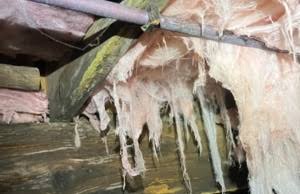
- Discoloration: yellow, gray, or brown stains and dark patches from absorbed water and dirt.
- Mold or mildew: black, green, or white fuzzy spots on the surface.
- Compacted or clumped fibers: the material looks matted or compressed instead of fluffy.
- Musty odor: a strong, moldy smell that comes with moisture.
- Sagging or falling insulation: it pulls away from the joists or droops under the weight of water.
Any of these means the insulation has lost its insulating power and may be hurting your indoor air quality and driving up energy costs.
How moisture reduces insulation performance
Fiberglass works by trapping air within its fibers to slow heat transfer. When it gets wet, it loses those air pockets and its R-value (its resistance to heat flow) drops sharply. On top of that:
- Mold in damp fiberglass poses health risks and can aggravate allergies and asthma.
- Moist insulation attracts pests like rodents and insects.
- Persistent moisture encourages wood rot in the crawl-space framing, leading to structural damage.
How to fix moisture-damaged fiberglass insulation
If you spot moisture damage, here are the steps that restore your crawl space's performance and safety.
1. Identify and control the moisture source
- Check drainage around the home: the ground should slope away from the foundation so water doesn't pool.
- Maintain gutters and downspouts: keep them clear and direct water at least five feet from the house.
- Address crawl-space vents: in a humid climate like Raleigh's, sealing vents and conditioning the space can help control moisture.
- Install a vapor barrier: cover the floor with a 6-mil or thicker polyethylene barrier to block ground moisture.
- Fix plumbing leaks: find and repair any leaks or broken pipes down there.
2. Remove wet or moldy fiberglass
- Wet or mold-contaminated fiberglass can't be salvaged — it has to come out completely.
- Wear protective gear (gloves, mask, goggles) during removal to avoid mold-spore exposure.
3. Dry the crawl space thoroughly
- Use fans, dehumidifiers, or professional drying equipment to pull out lingering moisture before installing anything new.
4. Choose moisture-resistant insulation
For a wet-prone area like Raleigh, consider:
- Closed-cell spray foam: waterproof, it seals gaps and blocks moisture.
- Rigid foam boards: resist water absorption and insulate crawl-space walls.
- Foil-faced or vapor-barrier insulation: reduces moisture movement and reflects heat.
5. Install it well and keep an eye on it
- Install insulation tightly and seal the edges to prevent air leaks.
- Re-check the crawl space periodically to catch new moisture early.
- Keep the vapor barrier in good shape and repair it if it's damaged.
The bottom line
In the Raleigh area, moisture seriously compromises fiberglass crawl-space insulation. Dampness, discoloration, mold, and sagging fibers all mean the insulation is no longer effective and could be harming your home's structure and air quality. Controlling the moisture source, removing the damaged material, drying the space, and installing moisture-resistant insulation are the steps that bring performance back.
Taking care of it now improves your home's energy efficiency, lowers utility bills, and makes for a healthier place to live. For extensive moisture or mold, having a specialist take a look ensures the problem is fully resolved.