
Efflorescence is the white, powdery mineral deposit left when moisture migrates through crawl-space masonry — a visible symptom of a water problem, not the problem itself.
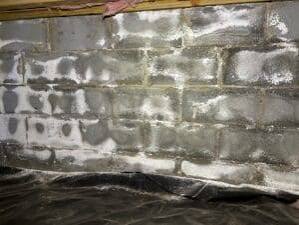
Efflorescence is a common yet misunderstood issue that affects many crawl spaces in the Raleigh, North Carolina area. Homeowners may notice a white, powdery residue on crawl space walls but not know what it is or why it appears. Understanding where efflorescence comes from and what it means in a crawlspace can play a big part in maintaining a healthy crawl space and protecting your Raleigh home's foundation.
What is efflorescence and where does it come from?
Efflorescence is a crystalline deposit of calcium left behind when moisture seeps through masonry surfaces like concrete or brick. In crawl spaces, moisture seeps through foundation walls, dissolving minerals in the material. When this moisture migrates to the surface and evaporates, it leaves behind the white, powdery deposits known as efflorescence.
The moisture responsible for efflorescence can come from several sources in Raleigh homes. The most common sources are exterior foundation-to-grade contact, groundwater infiltration, poor exterior drainage, or high humidity in unventilated crawl spaces.
How efflorescence affects your crawl space and home
While efflorescence itself is generally not harmful to human health, it is a clear sign of excess moisture infiltration, which can lead to serious problems if left untreated.
If the areas are patchy or there are small amounts of efflorescence around your foundation, it doesn't mean you have a major moisture issue; those patches may be a minor source of moisture and possibly contributing to a larger issue but shouldn't be causing one on its own.
It is possible that if you have larger, more continuous areas of efflorescence, it can be a larger contributing factor to a moisture issue and can weaken the foundation walls, cause wood rot, attract pests, and promote mold and mildew growth that impact both crawl space air quality and your home's overall environment.
Recognizing efflorescence as a warning sign in your Raleigh crawl space is important to preventing long-term damage and costly repairs.
The importance of proper crawl space inspection in Raleigh
If you notice white, powdery deposits in your crawl space, having a professional assess your situation is the best way to determine the source of moisture and the extent of any damage. An experienced professional can tell whether the efflorescence is just a minor moisture penetration or is causing a more serious issue, helping you make the right remediation decisions.
How to remedy efflorescence in your crawl space
The key to eliminating efflorescence is controlling moisture. In most Raleigh homes, this involves improving drainage around your foundation, ensuring gutters and downspouts direct water away from your home, and fixing any plumbing leaks in or near the crawl space.
Installing an encapsulation
Crawl space encapsulation — sealing the crawl space walls and floor with a vapor barrier combined with a dehumidifier — creates a dry, controlled environment that prevents moisture penetration from affecting your home.
Long-term benefits of moisture control in Raleigh crawl spaces
With proper moisture management, Raleigh homeowners can prevent efflorescence-related damage, improve indoor air quality, and extend the life of their home's foundation. Regular inspections and proactive maintenance are essential in Raleigh's humid climate to keep moisture in check year-round.
If you suspect efflorescence or moisture issues in your crawl space, contact trusted crawl space specialists in the Raleigh, NC area. Local experts understand the region's unique climate challenges and can provide customized solutions to protect your home from moisture damage and keep your crawl space healthy and dry.
What does returning efflorescence tell a homeowner?
Recurring deposits indicate that moisture is still moving through or across the masonry. The white salts are evidence of that movement, not proof of the source. Exterior runoff, capillary moisture, a leak, condensation, and past cleaning residues require different responses.
The National Park Service's masonry deterioration glossary describes efflorescence as soluble salts carried through masonry and notes that it can serve as a warning that water has found an entry path. Surface deposits may be less harmful than salts crystallizing within the masonry.
How should efflorescence be investigated before cleaning?
Document the pattern, locate moisture sources, and use a gentle test method before applying cleaners or coatings. Harsh acids, abrasive cleaning, and coatings can damage masonry or conceal an active moisture problem.
- Photograph the deposit before cleaning and after heavy rain.
- Check gutters, downspouts, grading, plumbing, and adjacent soil moisture.
- Look for spalling, cracks, damp wood, or deposits that return quickly.
- Consult a masonry professional when the surface is deteriorating or the material is uncertain.
GSA preservation guidance recommends eliminating excess moisture and rechecking surrounding areas if efflorescence returns.
Quick answers
Common questions about this crawl-space decision
What is efflorescence in a crawl space?
Efflorescence is the white, powdery, sometimes crystalline residue you'll see on foundation walls, cinder blocks, or concrete piers in a crawl space. It's mineral salts left behind after moisture moves through masonry and evaporates. In the Raleigh area, it's extremely common because our humid climate keeps foundation walls damp enough for the process to continue year after year.
Is efflorescence dangerous or just cosmetic?
The efflorescence itself is not dangerous — it's harmless mineral deposits. But it is a reliable signal that moisture is moving through your foundation walls. That underlying moisture pathway is what matters. Ignoring the moisture eventually leads to spalling of the masonry, wood damage where framing meets the wall, and mold growth on nearby organic materials.
Can I remove efflorescence from crawl-space walls myself?
A dry, soft-bristle brushing may remove loose surface deposits, but cleaning should follow identification of the moisture source. Do not assume an acid cleaner is safe for the masonry; inappropriate chemicals or aggressive methods can damage the surface. Test the gentlest suitable method in a small area or consult a masonry professional, then monitor whether deposits return.
What causes efflorescence to appear on cinder block foundation walls?
The classic cause is water in the soil pressing against the foundation, seeping through the porous block, and evaporating on the crawl-space side. The evaporation leaves behind the mineral salts you see as efflorescence. Common triggers: poor perimeter grading, downspouts discharging near the foundation, a high water table, or interior plumbing leaks tracking through the soil.
Do repair companies address the root cause of efflorescence?
The proposal should explain the moisture path, not merely cover the visible deposit. Depending on the evidence, the plan may involve gutters, downspouts, grading, plumbing, drainage, or another source-control measure. Ask what observation supports each recommendation, how success will be checked, and what happens if the deposit returns.